Table of Contents
Introduction
Investing in an indoor playground can be a highly rewarding venture. Families worldwide increasingly seek safe, educational, and engaging environments for children, making indoor playgrounds a booming segment in the leisure industry.
For investors, understanding the market, space planning, equipment selection, and operational strategies is essential for profitability. Unlike other businesses, indoor playgrounds combine entertainment, physical development, and educational value, offering a unique opportunity for high returns.
By carefully planning each aspect, from theme selection to layout and staffing, investors can build a business that attracts repeat customers and fosters a strong local community. If you want professional guidance, explore our Indoor Playground Solutions or request a free 3D playground design from a certified playground manufacturer.
Step 1: Conduct Comprehensive Market Research
Market research is the foundation of a successful indoor playground. Understanding local demand, demographics, and competitor offerings is crucial before any investment.
Analyze Local Demand
Examine family demographics, average household income, and recreational habits.
Identify existing family entertainment centers and assess what they do well and where they fall short.
Conduct surveys or polls via social media to discover preferred attractions, such as soft play areas, trampolines, or obstacle courses.
Define Your Target Audience
| Age Group | Preferred Attractions | Design Focus |
|---|---|---|
| Toddlers (1–3 years) | Soft play, mini slides, sensory toys | Safety padding, supervision |
| Kids (4–12 years) | Trampolines, climbing walls, role-play | Adventure, bright colors |
| Teens & Adults | Ninja courses, VR simulators | Challenge, excitement |
| Parents | Café, seating areas | Comfort, convenience |
Tip: Segmenting your audience ensures tailored experiences, increasing safety and repeat visits. For more, see Choosing the Right Playground Theme.
Local Competition Analysis
Evaluate ticket pricing, peak hours, and additional services like birthday packages or F&B options.
Identify gaps: for example, if no facility offers VR-based games or themed soft play, your playground can fill that niche.
Step 2: Plan Your Space and Layout Efficiently
The layout impacts both safety and profitability. Well-planned spaces encourage longer stays and higher spending per visitor.
Recommended Space Sizes
| Playground Type | Area | Key Features |
|---|---|---|
| Mini Indoor Play Area | 100–200㎡ | Ball pits, slides, tunnels |
| Medium Playground | 300–600㎡ | Trampoline zones, interactive games |
| Large Family Center | 800–2000㎡+ | Multi-theme play, café, party rooms, VR zones |
Layout Optimization Tips
Separate Zones by Age: Ensure toddlers are in a safe soft play area, while older kids can enjoy climbing walls or ninja courses.
Clear Sightlines: Parents should be able to supervise easily. Transparent barriers or open spaces help.
Ceiling Height: Maintain ≥ 4m for trampolines or climbing structures.
Color Psychology: Use bright, inviting colors to enhance energy and excitement.
Traffic Flow: Avoid bottlenecks by designing wide pathways and multiple entry/exit points.
Bonus: Adding a small retail or café section can increase revenue by 10–20% per visitor.
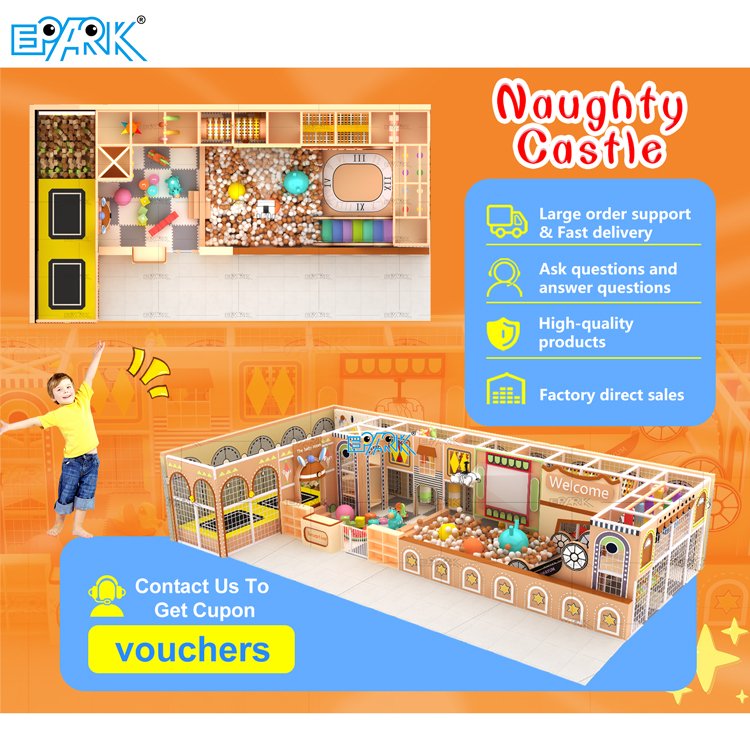
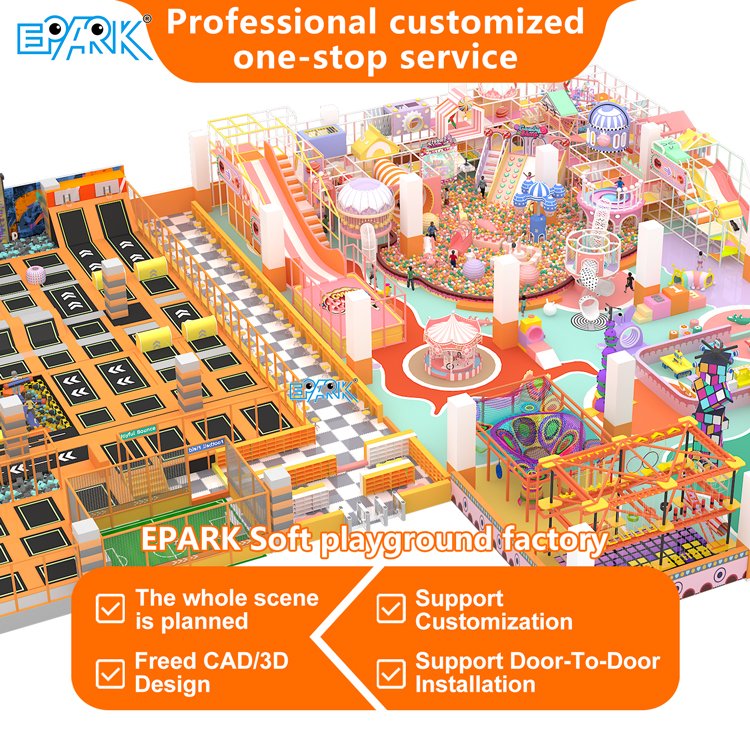
Step 3: Select High-Quality Indoor Playground Equipment
The right equipment ensures safety, fun, and operational efficiency. Investing in certified, durable equipment reduces maintenance costs and enhances customer trust.
Popular Equipment Options
Soft Play Equipment: Colorful, padded, and ideal for toddlers.
Trampoline Parks: Highly engaging for children and teens.
Adventure & Ninja Courses: Attract older children and adults; ideal for parties.
Interactive Game Machines: VR, AR, and ticket redemption machines encourage repeat visits.
Explore our Trampoline Equipment and Soft Play Systems for inspiration.
Safety Standards to Follow
EN1176 (Europe) – Playground equipment safety
ASTM F1487 (USA) – Design and installation safety
ISO9001 / CE / TUV – Quality and safety management
Customization & Branding
Themed playgrounds (jungle, ocean, space) improve recognition and marketing appeal. OEM/ODM manufacturers can provide fully customized designs, matching your brand and local market preferences.
Maintenance & Durability Tips
Inspect equipment weekly for wear and tear.
Use anti-slip flooring and fire-retardant materials.
Maintain clear signage for safety rules.
Step 4: Estimate Your Budget and Revenue
Budget planning is critical to avoid overspending and ensure profitability.
Typical Investment Breakdown
| Category | Cost (USD) |
|---|---|
| Site Rental & Renovation | $50,000 – $150,000 |
| Equipment Purchase | $60,000 – $200,000 |
| Staff & Operations | $10,000 – $30,000/month |
| Marketing & Maintenance | $5,000 – $10,000 |
Revenue Estimation
Daily Visitors: 100–300 weekdays, 500+ weekends
Average Ticket Price: $10–$25 per child
Additional Income: Birthday parties, café sales, merchandise
ROI Example
A medium-sized indoor playground can generate $30,000–$100,000+ monthly, with ROI typically reached in 12–18 months.
Pro Tip: Offering loyalty programs or monthly membership packages can boost retention and predictability of income.
.jpg)
Step 5: Choose a Reliable Playground Manufacturer
Your manufacturer is a key partner for success.
Selection Criteria
At least 10 years of production and export experience
3D layout and theme customization capabilities
Compliance with ASTM, EN, ISO standards
Full after-sales support: installation, maintenance, spare parts
EPARK Indoor Playground Solutions
EPARK delivers turnkey solutions globally. From design to installation, we provide full OEM/ODM support to help investors launch safe, engaging, and profitable indoor playgrounds.
Learn more at our Indoor Playground Manufacturer Page.
Step 6: Enhance Customer Experience
Long-term profitability depends on customer satisfaction.
Tips to Improve Experience
Cleanliness & Safety: Regular cleaning and safety inspections.
Themed Events: Birthday parties, holiday events, and workshops attract repeat customers.
Comfortable Amenities: Seating for parents, free Wi-Fi, and healthy café options.
Feedback Mechanism: Use surveys or apps to gather visitor feedback for continuous improvement.
Conclusion
Launching an indoor playground combines creativity, safety, and business strategy. By conducting detailed market research, optimizing space and layout, selecting certified equipment, and partnering with a reliable manufacturer, investors can establish a long-term, profitable business.
Take the first step today: request a free 3D playground design from EPARK and turn your indoor playground vision into reality.