Introduction
In today’s competitive indoor playground industry, choosing the right play equipment is one of the most important decisions for investors and operators. Whether you are planning a new indoor play center, upgrading an existing venue, or building a family entertainment center, the attractions you install will directly impact customer experience and profitability.
Among the most popular installations in modern play centers are Ninja Course systems and Soft Play areas. Both provide exciting activities for children, but they serve very different purposes. A Ninja Course focuses on athletic challenges and high-energy movement, while Soft Play equipment creates a safe environment for younger children to explore and develop motor skills.
For B2B buyers and indoor playground investors, understanding the difference between Ninja Course vs Soft Play is essential. The right decision depends on your target age group, available space, safety requirements, and long-term business goals.
In this guide, we will explain how each attraction works, compare their benefits, and help you determine which option is best for your indoor playground business.
What Is a Ninja Course?
A Ninja Course, sometimes called a ninja obstacle course, is a dynamic play structure inspired by athletic obstacle competitions. These courses include a sequence of physical challenges that test strength, balance, agility, and coordination.
Ninja-style attractions have become extremely popular in trampoline parks, indoor adventure parks, and modern indoor playgrounds because they provide a more exciting experience for older children.
Typical obstacles in a ninja course include:
Rope swings
Monkey bars
Hanging rings
Balance beams
Floating steps
Climbing nets
Warp walls
Children move from one obstacle to another, completing the course step by step. Many play centers design their ninja course with multiple difficulty levels, allowing beginners and advanced players to enjoy the activity.
Unlike traditional playground equipment, a Ninja Course encourages competitive play. Children often challenge friends to complete the course faster or try to reach the finish line without falling.
For indoor playground operators, this competitive element can significantly increase visitor engagement and repeat visits.
 Key Features of Ninja Course Systems
Modern ninja obstacle courses are built using modular steel structures and interchangeable obstacles. This allows operators to customize layouts according to the venue size.
Some important features include:
1. High-Energy Physical Activity
A Ninja Course encourages children to climb, swing, and jump. These movements help develop muscle strength and coordination, making the attraction both entertaining and physically beneficial.
2. Modular and Customizable Design
Manufacturers design ninja course systems with replaceable obstacles. Operators can upgrade or rearrange elements to keep the experience fresh for returning visitors.
3. High Replay Value
Because the course involves skill and challenge, children often attempt it multiple times. This creates longer play sessions and increases the value of the attraction for an indoor play center.
If you want to explore more design ideas, you can read our guide:
Internal Link: How to Design a Profitable Indoor Playground Layout
Recommended Age Groups for Ninja Courses
A Ninja Course is usually designed for children aged 6 to 12, although some installations also attract teenagers.
Typical age segmentation:
| Age Group | Difficulty Level | Example Obstacles |
|---|---|---|
| 5–7 years | Beginner | Stepping pads, low balance beams |
| 7–10 years | Intermediate | Rope swings, climbing nets |
| 10–14 years | Advanced | Monkey bars, warp walls |
Commercial ninja courses must comply with international safety standards, such as:
ASTM F1487 – U.S. playground safety standard
EN1176 – European playground equipment safety regulation
CE certification for equipment safety
These standards ensure proper fall height limits, safety padding, and obstacle spacing, which are critical for indoor playground installations.
 What Is Soft Play?
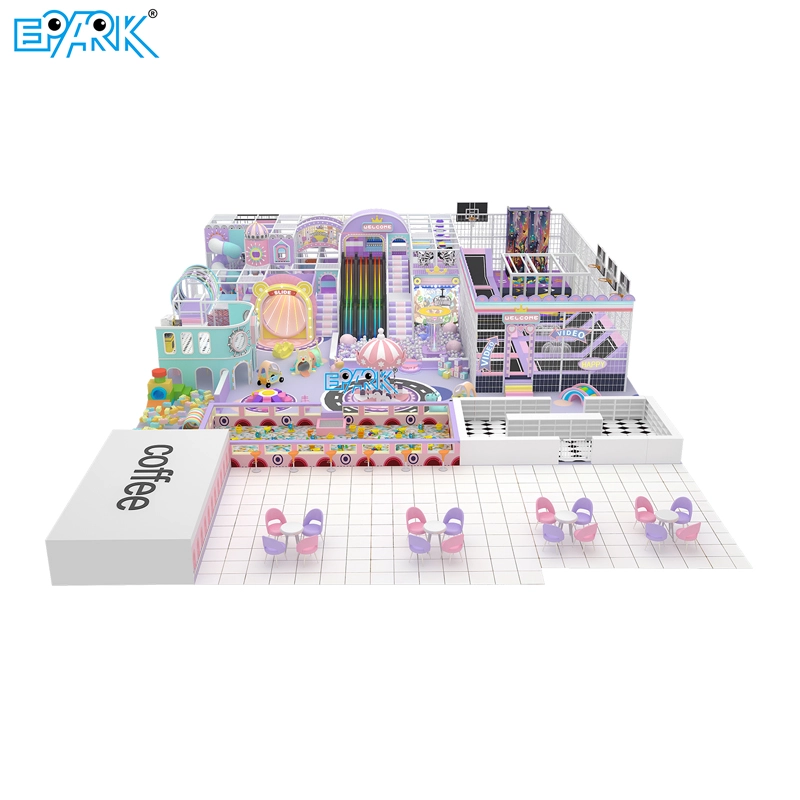
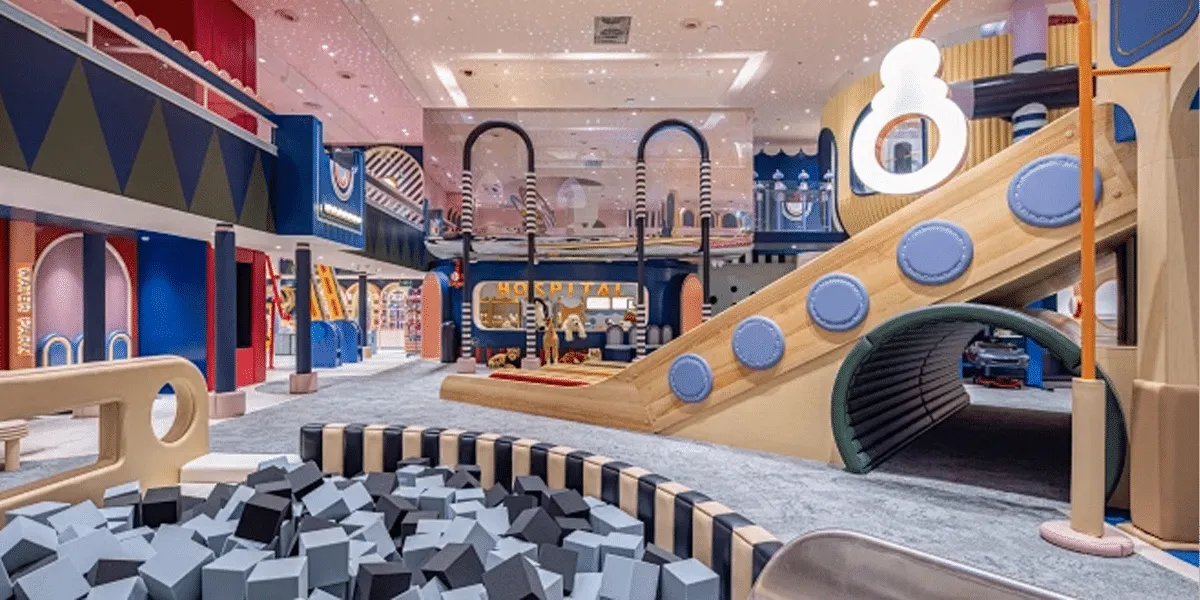
A Soft Play area is a padded playground environment designed primarily for toddlers and younger children. Unlike a ninja obstacle course, soft play equipment focuses on safe exploration and early childhood development.
Soft play systems use foam padding, vinyl covers, and rounded edges, making them one of the safest forms of indoor playground equipment.
Common soft play elements include:
Ball pits
Soft slides
Foam obstacles
Crawl tunnels
Climbing blocks
Interactive panels
Mini trampolines
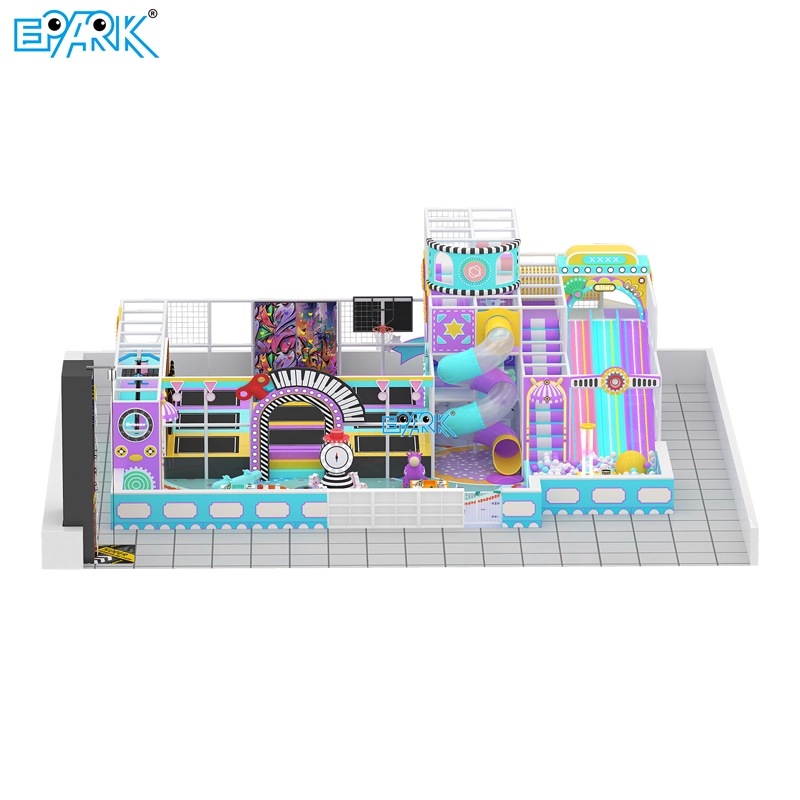
These components are often integrated into multi-level indoor playground structures, allowing children to explore different sections through tunnels and slides.
Soft play environments are especially popular in:
Shopping mall play centers
Family entertainment centers
Daycare facilities
Kids indoor playgrounds
For operators targeting families with toddlers, a Soft Play area is often the core attraction of the venue.
Key Features of Soft Play Areas
Soft play structures are specifically designed with safety and accessibility in mind.
Fully Padded Structures
All surfaces are covered with high-density foam and PVC padding. This reduces the risk of injuries and allows children to play freely.
Encourages Social Play
Unlike a Ninja Course, where children focus on completing challenges, soft play areas encourage interaction and imaginative play. Kids can crawl through tunnels, jump into ball pits, and explore themed environments.
Flexible Indoor Playground Design
Soft play systems can be designed vertically with multiple levels. This makes them ideal for smaller indoor playground spaces where maximizing floor area is important.
If you want to learn more about selecting the right equipment, check our guide:
Internal Link: How to Choose the Best Indoor Playground Manufacturer
Recommended Age Groups for Soft Play
Soft play areas are best suited for children aged 1 to 6.
| Age Group | Play Focus | Equipment Type |
|---|---|---|
| 1–3 years | Sensory development | Soft blocks, crawl tunnels |
| 3–5 years | Exploration | Small slides, ball pits |
| 5–6 years | Motor skill development | Climbing obstacles |
Safety regulations for soft play equipment often follow:
ASTM F1918 – Soft contained play equipment standard
EN1176 playground safety standard
These guidelines ensure that padding thickness, structural stability, and materials meet commercial safety requirements.
 Ninja Course vs Soft Play: Key Differences
When comparing Ninja Course vs Soft Play, several factors should be considered, including age group, gameplay experience, safety design, and business value.
Target Age Group
The biggest difference between a Ninja Course and Soft Play is the target audience.
| Feature | Ninja Course | Soft Play |
|---|---|---|
| Main Age Group | 6–12 years | 1–6 years |
| Activity Level | High intensity | Low to moderate |
| Parent Supervision | Medium | High |
Families with toddlers usually prefer Soft Play areas, while older kids are more attracted to Ninja Course challenges.
Gameplay Experience
A Ninja Course provides a challenge-based experience. Children attempt to complete a sequence of obstacles, which creates excitement and a sense of achievement.
Soft play areas offer a free-play environment. Children can explore the structure without a defined path or goal.
Because of these differences, many modern indoor playgrounds combine both attractions to satisfy different age groups.
Safety Design
Soft play areas are designed with maximum safety in mind.
Key safety features include:
Fully padded surfaces
Low fall heights
Enclosed play zones
A Ninja Course also includes safety elements, such as foam mats and impact-absorbing flooring, but the higher activity level means supervision is often required.
Space Requirements
Space planning is another important factor when deciding between Ninja Course vs Soft Play.
| Feature | Ninja Course | Soft Play |
|---|---|---|
| Layout | Linear obstacle path | Multi-level structure |
| Ceiling Height | 3.5–5 m recommended | 2.5–4 m |
| Space Efficiency | Medium | High |
Soft play equipment can often maximize vertical space, making it ideal for shopping malls or compact indoor playground locations.
Business Value for Play Centers
Both attractions offer strong commercial value, but in different ways.
Ninja Course Benefits
Attracts older children and teenagers
Encourages competitive play
High repeat engagement
Suitable for adventure parks and trampoline parks
Soft Play Benefits
Essential for families with toddlers
Ideal for birthday parties
High safety perception for parents
Consistent weekday traffic
Successful indoor playground businesses often install both Soft Play equipment and a Ninja Course to increase visitor diversity.
 Should You Choose Ninja Course or Soft Play?
The decision between Ninja Course vs Soft Play depends on several key factors.
Choose Ninja Course if:
Your target audience includes older kids
Your venue has higher ceilings
You want a high-energy attraction
Choose Soft Play if:
Your main visitors are toddlers and young children
Safety is your primary selling point
Your venue has limited space
However, many modern indoor playground operators combine both attractions. This allows them to serve children of multiple age groups while increasing overall customer satisfaction.
Conclusion
Both Ninja Course systems and Soft Play areas are valuable attractions in the indoor playground industry. However, they serve different roles.
A Ninja Course offers exciting obstacle challenges that attract older children and create a competitive experience. Meanwhile, Soft Play equipment provides a safe environment where toddlers can explore and develop essential motor skills.
For most indoor playground investors, the best solution is not choosing one over the other—but integrating both attractions into a well-designed play center layout. This strategy allows operators to attract a wider customer base and maximize long-term revenue.
Start Building Your Indoor Playground Today
If you are planning to open or upgrade an indoor playground or family entertainment center, choosing the right equipment is critical.
Our company specializes in:
Custom Ninja Course design
Commercial Soft Play equipment
Complete indoor playground solutions
We provide:
Free playground layout design
Factory-direct manufacturing
International safety certifications
One-stop installation service
Contact us today to get a free indoor playground design plan and quotation.