Table of Contents
Introduction
Indoor playgrounds have become an essential part of modern family entertainment. A well-designed indoor playground is not just a place for fun—it plays a key role in supporting children’s physical health, social skills, and cognitive development.
For parents, one of the most common concerns is simple: what age is suitable for an indoor playground? Safety and engagement depend heavily on whether the environment matches a child’s developmental stage.
For investors and operators, this question is even more important. Understanding age suitability helps optimize:
- Equipment selection
- Space planning
- Customer targeting
- Revenue generation
In this guide, we will explore the ideal age range for an indoor playground, the benefits for different age groups, and how to design a space that maximizes both user satisfaction and business success.
What Age Is Suitable for an Indoor Playground?
An indoor playground is typically designed for children aged 6 months to 12 years old. However, this wide range must be divided into smaller groups to ensure safety and engagement.
Age Group Overview
| Age Range | Development Stage | Recommended Indoor Playground Features |
|---|---|---|
| 6 months – 3 years | Toddlers | Soft play, sensory zones, ball pits |
| 3 – 6 years | Preschoolers | Slides, climbing frames, role play |
| 6 – 12 years | School-age children | Obstacle courses, trampolines |
Modern indoor playground equipment is often designed with zoning concepts, allowing multiple age groups to play safely in the same facility.
Benefits of Indoor Playgrounds for Different Age Groups
Toddlers (6 Months – 3 Years)
At this stage, children are developing basic motor skills and sensory awareness. A toddler-friendly indoor playground focuses on safety and stimulation.
Recommended Features:
- Soft foam structures
- Low-height slides
- Sensory play panels
- Enclosed play zones
Key Benefits:
Short, safe activities like crawling and climbing help improve balance and coordination. Sensory elements such as textures and colors support early brain development.
Additionally, a secure environment helps toddlers build confidence and independence. For operators, maintaining high hygiene standards in this zone is critical to gaining parental trust.
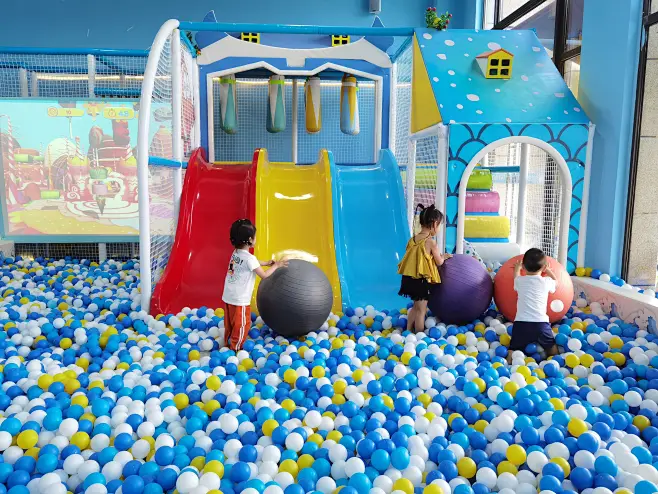 Preschoolers (3 – 6 Years)
Preschoolers are the most active users of an indoor playground. They are curious, energetic, and eager to interact with others.
Recommended Features:
- Multi-level play structures
- Interactive games
- Themed play areas
- Small obstacle courses
Key Benefits:
Children in this group develop stronger coordination and physical strength through active play. Social interaction also becomes important, helping them learn teamwork and communication.
Creative zones within an indoor playground encourage imagination and problem-solving, which are essential for early education.
From a business perspective, this group often delivers the highest return on investment, as they visit frequently and stay longer.
School-Age Children (6 – 12 Years)
Older children seek more challenging and exciting experiences. A well-designed indoor playground should include advanced attractions to meet their needs.
Recommended Features:
- Ninja courses
- Trampoline areas
- Climbing walls
- Rope courses
Key Benefits:
These activities improve strength, endurance, and flexibility. They also help children develop problem-solving skills and confidence.
Including high-energy zones in your indoor playground equipment strategy can increase repeat visits and attract a wider customer base.
Why Age Zoning Matters in an Indoor Playground
Safety Compliance
Different age groups require different safety standards. For example, toddler areas must have softer materials and lower heights, while older children can safely use more complex structures.
High-quality indoor playground equipment should comply with international standards such as ASTM or EN guidelines.
Better User Experience
Children enjoy play more when activities match their abilities. A properly zoned indoor playground ensures that each child finds suitable and engaging activities.
This leads to higher satisfaction and better reviews, which are critical for long-term success.
Higher Revenue Potential
A multi-zone indoor playground attracts families with children of different ages. This increases:
- Visit frequency
- Length of stay
- Overall spending
For operators, this translates directly into higher profitability.
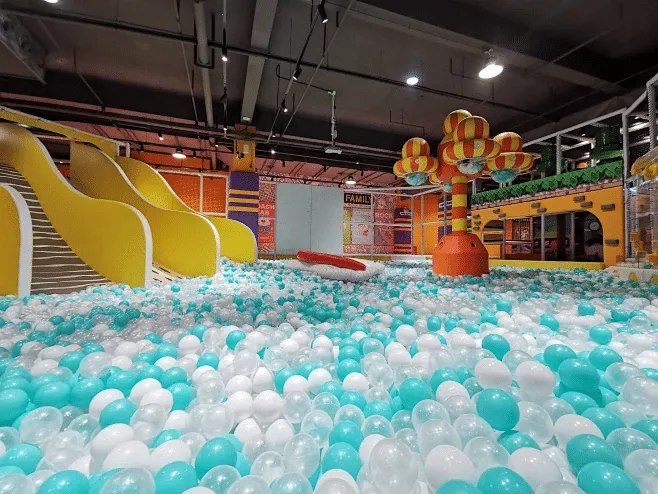 How to Design an Indoor Playground for Multiple Age Groups
Create Clear Play Zones
Divide your indoor playground into:
- Toddler areas (safe and enclosed)
- Preschool zones (interactive and colorful)
- Adventure zones (challenging and dynamic)
This structure improves both safety and operational efficiency.
Prioritize Safety and Visibility
Safety is the foundation of any successful indoor playground. Use:
- Soft padding materials
- Anti-slip flooring
- Open layouts for easy supervision
Parents are more likely to trust and revisit a well-designed space.
Use Modular Indoor Playground Equipment
Modular systems allow you to expand or upgrade your indoor playground equipment over time. This flexibility helps reduce long-term costs and adapt to market trends.
Add Value-Enhancing Features
To increase revenue, consider adding:
- Seating areas for parents
- Cafés or snack bars
- Birthday party rooms
These features turn your indoor playground into a complete family entertainment center.
Internal Resources You May Find Helpful
To learn more about optimizing your playground business, explore:
- How to Choose the Right Indoor Playground Equipment
- What Certifications Should Indoor Playground Equipment Have
- How to Increase Revenue in Your Play Center Business
These resources can help you make more informed decisions when planning your project.
Common Mistakes to Avoid
Even a well-funded indoor playground can fail due to poor planning. Avoid these common issues:
- Designing for only one age group
- Ignoring safety standards
- Overcrowding equipment
- Lack of interactive or educational elements
A balanced approach ensures long-term success and customer satisfaction.
Conclusion
So, what age is suitable for an indoor playground? The answer is clear: children from 6 months to 12 years old can benefit, as long as the space is properly designed.
For parents, this means a safe and enriching environment for their children. For investors and operators, it creates an opportunity to build a profitable and scalable business.
A well-planned indoor playground combines safety, engagement, and smart design—making it a valuable investment in today’s family entertainment industry.
Call to Action
If you are planning to build or upgrade an indoor playground, choosing the right supplier is essential.
With over 14 years of experience, we offer:
- Customized indoor playground solutions
- High-quality, certified indoor playground equipment
- Professional layout and zoning design
Contact us today to get a free design consultation and start building a successful indoor playground project.