Introduction
Launching a successful indoor play center starts with selecting the right play center equipment. For B2B buyers, distributors, and operators, equipment decisions directly affect safety, customer satisfaction, and long-term profitability. A thoughtfully equipped indoor playground attracts families, increases dwell time, and encourages repeat visits, while poor equipment choices can lead to safety issues and lower ROI.
This guide provides a comprehensive overview of the essential equipment categories for starting a play center. You’ll learn how to match equipment with target age groups, comply with international safety standards, and choose durable, scalable solutions that meet your business goals.
Understanding the Play Center Market & Equipment Importance
What Defines a Play Center?
A play center is an indoor facility designed to provide children and families with safe, engaging, and educational entertainment. Unlike traditional outdoor playgrounds, an indoor playground operates year-round, unaffected by weather, making it an attractive investment in urban and climate-sensitive areas.
Well-chosen equipment drives visitor engagement and repeat business. For example, modular play structures and themed zones can increase visitor dwell time by up to 30% compared to simple play areas. (How Many Square Meters Does Your Indoor Playground Need?)
Buyer Considerations for B2B Purchasers
Before investing, consider these factors:
- Target Demographics: Equipment for toddlers (1–5 years) differs significantly from equipment for older children or mixed-age family areas.
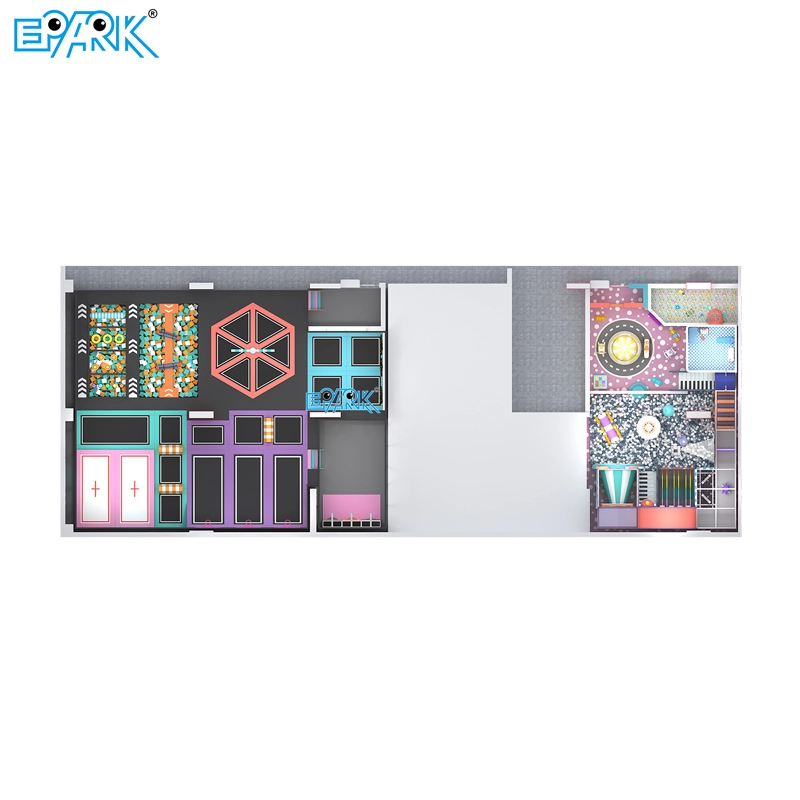
- Space Planning: Layout affects safety, traffic flow, and future expansion.
- Safety Compliance: Ensure equipment meets ASTM F1487, EN 1176, or local safety regulations.
- Supplier Expertise: Experienced manufacturers can provide custom modular play structures, layout advice, and post-sale support.
Proper planning ensures your play center is safe, engaging, and profitable from day one.
 Core Equipment Categories You Need to Start a Play Center
Below are the essential categories of play center equipment, each explained with its benefits and target audience.
Safety & Foundational Elements
Safety is the foundation of a commercial indoor playground. All high-engagement attractions should be built on a safe base.
Key elements include:
| Equipment Type | Purpose | Standards / Notes |
|---|---|---|
| Flooring & Padding | Cushions falls and prevents injuries | Shock-absorbing, fire-resistant; ASTM F1292 compliant |
| Netting & Barriers | Prevents children from falling off structures | Must withstand 200+ lbs force |
| Signage & Safety Boards | Informs visitors of rules and safety procedures | Multi-language options recommended |
Investing in safety reduces liability and builds parental trust. (OEM & ODM Playground Solutions)
Soft Play Areas — For Young Children
Soft play zones are essential for toddlers and preschoolers. They offer a safe space for early development and sensory exploration.
Common elements include:
- Soft Blocks & Foam Shapes: Encourage crawling, stacking, and motor skills.
- Crawl Tunnels: Support coordination and exploration.
- Sensory Panels: Stimulate tactile, auditory, and visual senses.
These areas are ideal for ages 1–5 and can be modular to adapt to space or future expansions. (Indoor Playground Profitability Guide)
Modular Play Structures & Climbers
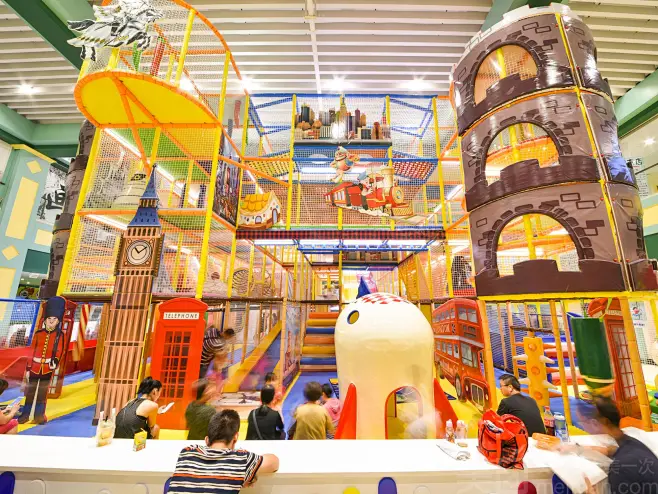
Multi-level modular play structures are the backbone of most play centers. They maximize vertical space and appeal to a wider age range, typically 3–12 years.
Features include:
- Slides, tunnels, rope bridges, and climbing nets.
- Platforms that interconnect multiple play zones.
- Observation points for staff and parents.
Technical standards:
- Materials: HDPE panels, powder-coated steel frames
- Weight capacity: 100–150 lbs per child
- Spacing: Minimum 24-inch clearance between moving parts
These structures allow phased expansion as the business grows. (Why Kids Need Indoor Playgrounds)
Active Fun Attractions
Active zones engage older children and family groups, boosting dwell time and revenue.
Popular options:
- Trampoline Zones: Wall-to-wall trampolines with safety padding.
- Obstacle Courses: Ninja-style courses for agility and strength.
- Interactive Play Platforms: Digital walls and motion-sensitive floors combine physical activity with gamified fun.
Operational tips: Ensure sufficient supervision and schedule maintenance to prevent injuries.
Thematic Zones & Add-Ons
Themed play areas enhance engagement and create memorable experiences.
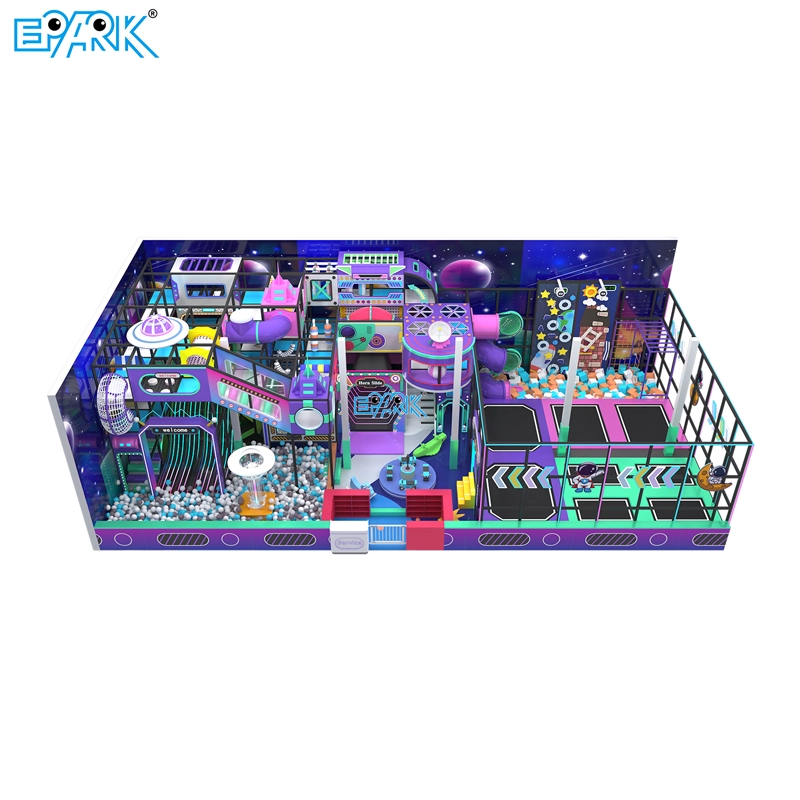
- Playhouses & Castles: Encourage imaginative role-play.
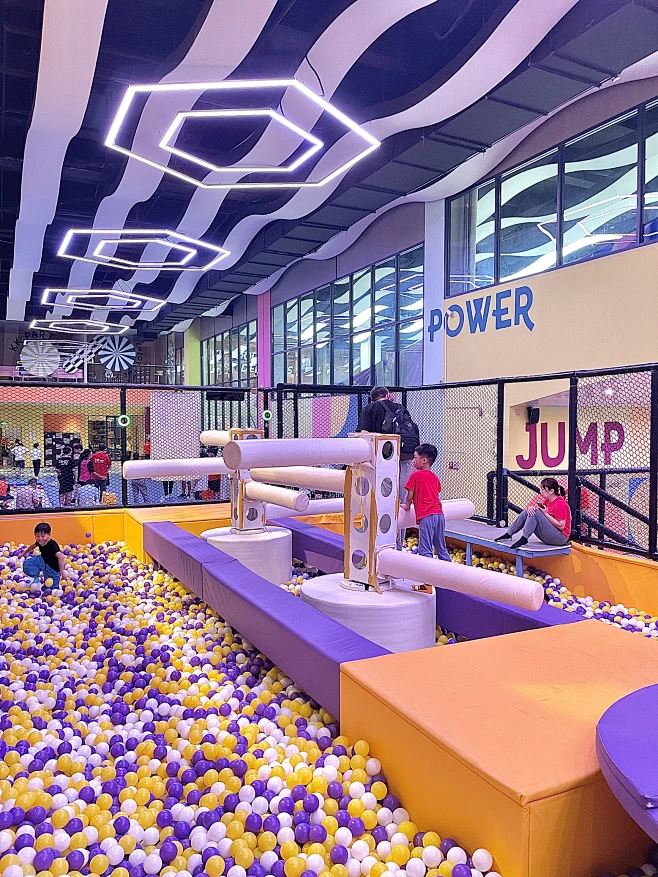
- Ball Pits: Anti-bacterial balls and cushioned bases.
- Role-Play Sections: Mini shops, kitchens, or doctor clinics.
Themed zones increase customer dwell time and social sharing. They also provide opportunities for birthday packages and events.
 Choosing Equipment Based on Your Target Customer
Toddler-Focused Play Centers
- Low-height soft structures, mini slides, and sensory boards.
- Calm and contained for parental supervision.
- Great for daycare groups and early learning facilities.
Mixed-Age Family Entertainment
- Multi-level climbers for ages 3–12.
- Interspersed seating for parents.
- High-energy attractions like trampolines for older children.
Adult & Fitness-Oriented Play Zones
- Adult-friendly climbing walls and obstacle courses.
- Family challenge zones attract teens and parents.
- Equipment must support higher weight capacities and active usage.
Equipment Selection Best Practices for B2B Buyers
Match Equipment to Space & Layout
- Conduct a site survey to optimize traffic flow.
- Allocate 40% of space for active zones, 20% for seating and circulation.
- Separate age zones to improve safety and satisfaction.
Prioritize Durability & Compliance
- Commercial-grade equipment with ASTM F1487 or EN 1176 certification.
- Fire-resistant, non-toxic, and antimicrobial materials.
- Evaluate supplier warranties and replacement part availability.
Future-Proof With Modular Expansion
- Modular equipment allows phased upgrades.
- Flexibility minimizes downtime and maximizes ROI.
- Partner with suppliers who provide layout optimization and certification support. (choosing a commercial indoor playground supplier )
Conclusion
Starting a play center requires a strategic approach to equipment selection. By focusing on safety, soft play areas, modular climbers, active attractions, and themed zones, B2B buyers can create a space that engages children of all ages, maximizes dwell time, and ensures long-term profitability. Prioritizing compliance, durability, and scalability will protect your investment and build customer trust, setting your indoor playground apart in a competitive market.
Call to Action
Ready to design your ultimate play center? Contact us today for a personalized equipment proposal, 3D layout plan, and consultation. Our experts help you select modular play structures, safety-compliant attractions, and thematic zones that drive engagement and ROI. Submit an inquiry now and turn your vision into a thriving indoor playground.