Introduction
Determining the ideal size for an indoor playground is one of the most critical steps in planning a profitable and safe family entertainment project. The total square meters you allocate will influence visitor capacity, safety compliance, equipment selection, operational efficiency, and long-term business growth. Whether you are planning a compact children’s soft play zone, a medium-sized indoor adventure center, or a large-scale trampoline and ninja course facility, calculating the appropriate area is essential to balancing investment and operational return.
This comprehensive guide explains how to determine the optimal indoor playground size based on technical standards, age-group requirements, equipment types, and facility layout strategies. By the end, you will understand exactly how to assess space needs for any type of indoor playground and how to maximize square-meter efficiency for long-term profitability.
Why Size Matters for Indoor Playgrounds
Selecting the right area size is more than an architectural decision—it affects visitor safety, user experience, revenue potential, maintenance efficiency, and long-term flexibility. Below are the five core reasons why square-meter planning is the foundation of a successful indoor playground.
Safety Compliance and Risk Reduction
Indoor playgrounds must follow international safety standards such as EN 1176, ASTM F1918, and ISO 8124. These standards specify minimum fall-zone clearances, circulation spaces, and equipment spacing.
Overcrowding increases collision risk, especially around slides, trampolines, rope bridges, and obstacle elements.
Narrow walkways impede supervision and emergency evacuation.
Insufficient safety zones around equipment reduce compliance with fall-height requirements.
A well-sized space ensures:
Clear impact-attenuating zones
Adequate buffer areas between different activity types
Compliance with certified hazard-free circulation routes
Parents and children feel safer when the environment is open, visible, and unobstructed.
Quality of the Play Experience
Children’s behavior and engagement levels are directly affected by space density. A cramped environment leads to shorter play cycles, congestion, and sensory overload. A spacious playground supports:
Longer dwell times
Smooth transitions between activities
More natural exploration and discovery
Reduced frustration and behavioral conflicts
Large-format attractions—such as trampolines, ball pits, and adventure towers—require generous space to deliver their intended play value. Properly allocating square meters ensures each attraction maintains its full experiential impact.
Operational Efficiency
Beyond play value, space allocation affects how efficiently the business operates.
A space that is too small limits:
Capacity during peak hours
Birthday party scheduling
Group visits and school tours
Expansion of new attractions
A space that is too large leads to:
Unnecessary rental costs
Higher HVAC and utility expenses
Increased staffing requirements
Underutilized zones that provide no ROI
Well-balanced planning ensures optimal revenue per square meter while keeping operational expenses proportionate to business demand.
Customer Comfort and Parent Experience
Indoor playgrounds serve families, not just children. Parents require:
Comfortable seating areas
Good lines of sight for supervision
Resting zones with adequate spacing
Access to food, beverages, and Wi-Fi
If the playground area consumes too much of the total space, parent facilities suffer—reducing the overall value of the visit. The most successful venues allocate 15–25% of total area to parent zones and support amenities.
Long-Term Adaptability
A well-sized indoor playground allows for:
Future equipment upgrades
Seasonal attraction rotations
Modular expansions (trampolines, ninja courses, sports activities)
Multi-age zoning
Choosing the correct area today ensures your facility remains competitive and adaptable for years ahead.
Factors That Determine the Size of Your Indoor Playground
Determining space needs is not simply choosing a large or small venue. It is a technical and strategic process involving age demographics, equipment selection, capacity forecasts, layout design, and operational model.
Below are the primary factors influencing required square meters.
Target Age Groups
Children of different ages require different types of equipment and corresponding space. The table below summarizes typical square-meter allocation guidelines by age group:
| Age Group | Play Characteristics | Recommended Space | Key Requirements |
|---|---|---|---|
| 1–3 years | Soft play, gentle movement | 20–80 sqm | Soft flooring, enclosed zones |
| 4–7 years | Climbing, sliding, exploration | 80–250 sqm | Multi-level soft play structures |
| 8–12 years | High-energy, challenge-based | 200–600 sqm | Trampolines, ninja courses, climbing walls |
| Mixed Ages | Combination of zones | 300–1,200+ sqm | Age-segregated, clearly zoned areas |
Multi-age facilities require significantly more area due to zoning requirements and increased safety buffer distances.
Types of Activities and Attractions
Your equipment selection directly determines total space needs. Below is a professional reference table for common playground types:
| Attraction Type | Minimum Required Area | Notes |
|---|---|---|
| Soft Play Area | 100–400 sqm | Ideal for toddlers and young children |
| Trampoline Area | 500–1,500 sqm | Requires clear safety zones and reinforced flooring |
| Ninja Course | 200–800 sqm | Requires linear pathways and overhead clearance |
| Climbing Walls | 50–200 sqm | Requires 5–7 m ceiling height and fall-zone padding |
| Foam Pits | 60–150 sqm | Relates to trampoline or stunt equipment |
| Infant Zone | 20–40 sqm | Must be visually isolated for safety |
| Multi-Activity FEC | 1,000–3,000+ sqm | Integrates multiple zones |
Different equipment also has distinct fall-height and safety-zone requirements, influencing the total area.
Layout and Space Efficiency
A well-engineered layout can increase functional play area by 30–50% without increasing square meters.
Key considerations include:
Circulation routes
Emergency exits
Supervision visibility
Multi-level structures
Separation of quiet vs. active zones
Poor layouts result in dead corners, bottlenecks, and underutilized space. A professional layout maximizes both safety and revenue potential.
Supporting Facilities
Support facilities are essential to operational success. They often require 20–35% of the total venue area:
| Supporting Facility | Typical Space Requirement |
|---|---|
| Reception & Check-in | 10–40 sqm |
| Parent Seating | 40–120 sqm |
| Party Rooms | 20–50 sqm each |
| Storage | 10–30 sqm |
| Staff Office | 10–20 sqm |
| Snack Bar / Café | 40–100 sqm |
| Washrooms | Regulations vary by region |
These areas must be considered during total square-meter calculations.
Business Model and Location Constraints
Examples:
Shopping mall playgrounds: 150–400 sqm
Community indoor playgrounds: 300–800 sqm
Large FECs: 1,500–3,000 sqm
Sports-oriented centers: 2,000–5,000 sqm
Rents, ceiling height availability, and long-term cost projections must align with your business model.
-5.webp)
Space Requirements for Different Indoor Playground Types
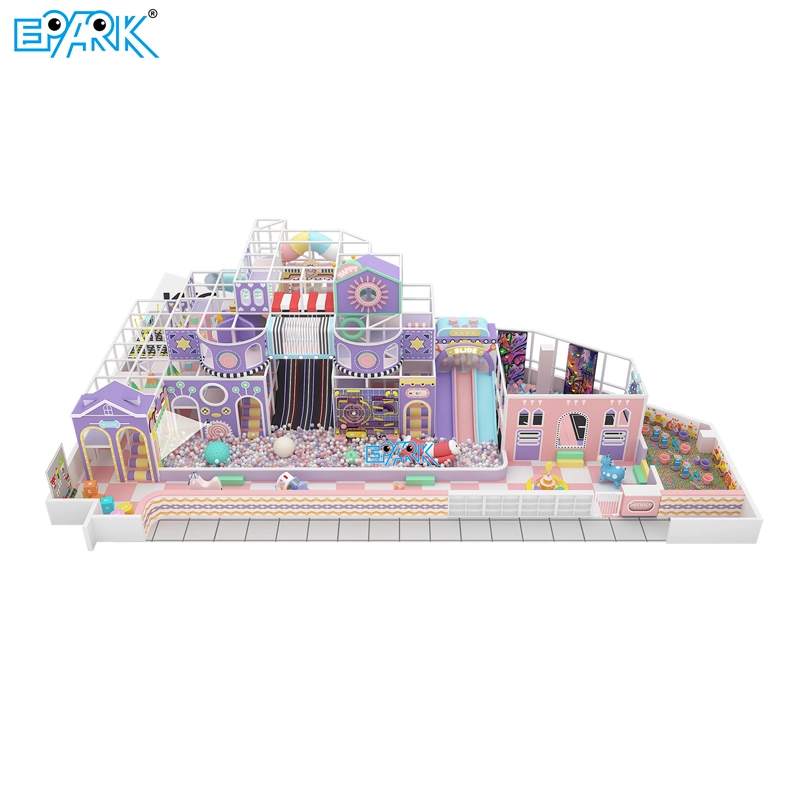
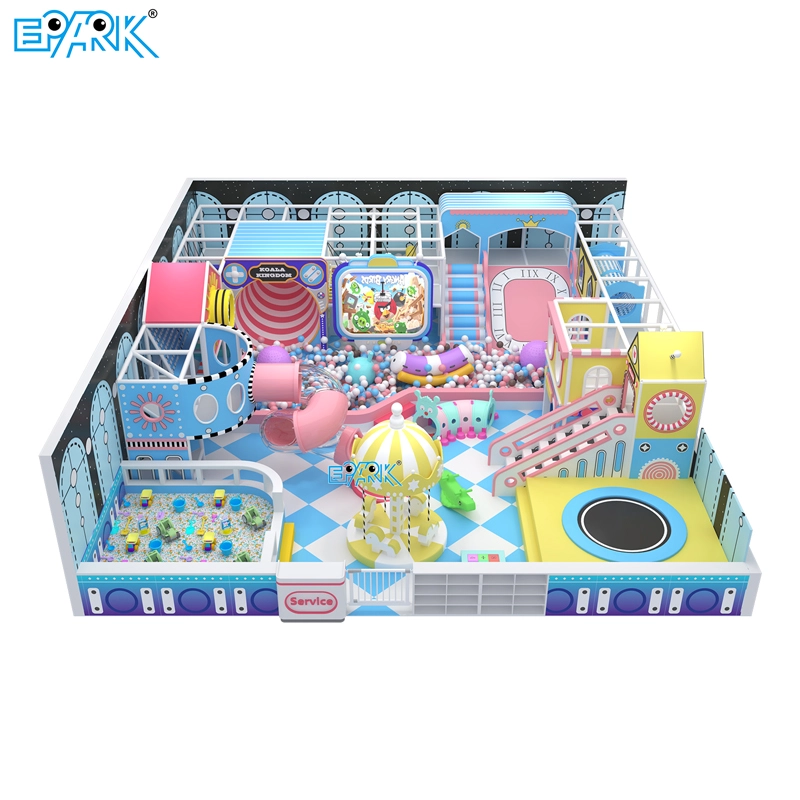
Soft Play Areas (100–400 sqm)
Soft play zones cater to toddlers and younger children. They typically include:
Small slides
Ball pits
Mini climbing frames
Sensory play elements
Advantages:
High safety
Compact layout options
Strong appeal to families with young children
Well-designed soft play environments can support 30–60 children simultaneously in less than 300 sqm.
Trampoline Parks (500–1,500 sqm)
Trampoline parks require:
Reinforced flooring
Open jump areas
Dodgeball courts
Basketball hoops
Foam landing pits
Safety standards require 2.0–2.5 m clear zones around all trampolines, and foam pits require deeper space buffers. These facilities appeal to older children and teenagers, increasing average spending per visitor.
Ninja Courses (200–800 sqm)
Ninja courses include:
Rope swings
Monkey bars
Cargo nets
Balance beams
Obstacle paths
They require:
Linear or circuit-shaped layout
Minimum 3.5–4.5 m ceiling height
High-strength steel frames
Ninja attractions significantly increase repeat customer visits due to challenge-based play patterns.
Climbing Walls (50–200 sqm)
Key requirements:
Minimum ceiling height of 6–7 meters
EN 12572 compliant flooring padding
Top-rope or auto-belay configurations
Climbing walls provide strong recreational and athletic value while occupying comparatively less floor space.
Multi-Activity FECs (1,000–3,000+ sqm)
These large-scale facilities combine:
Soft play
Trampolines
Ninja courses
AR-based games
Sports courts
This model yields the highest revenue potential but requires strategic zoning and flow design to prevent congestion.
-3.webp)
How to Maximize Your Indoor Playground Space
Even with limited square meters, strategic planning can dramatically improve functionality, capacity, and customer satisfaction.
Leverage Vertical Space
Vertical expansion is often the most efficient way to increase play value.
Examples:
Multi-level soft play structures
Elevated rope bridges
Vertical mazes
Tower play features
A three-story structure uses the same footprint as a single-level installation but creates 3× functional play capacity.
Implement Age-Zoning Strategies
Age zoning reduces accidents and optimizes flow.
Typical zoning:
0–3 years: Enclosed soft corner
4–7 years: Soft play maze and slides
8–12 years: Trampolines, ninja courses, climbing walls
Clear zoning increases parental comfort and improves safety compliance.
Use Compact Hybrid Layouts
Hybrid layouts combine activities to save space, such as:
Slides integrated above ball pits
Tunnels beneath climbing nets
Rope courses built over seating areas (with safety nets)
Soft play structures above storage rooms
These integrated designs minimize wasted space.
Allocate Support Areas Efficiently
Support areas should not dominate the floor plan.
Best practices include:
Placing seating along perimeters
Multi-purpose party rooms with folding walls
Compact café counters rather than full kitchens
Vertical storage systems
Efficient back-of-house planning reduces total required square meters.
Follow Safety Distancing Guidelines
Industry standards require:
1.5–2.5 m fall zones depending on equipment type
Minimum 1.2 m circulation pathways
Fire-escape compliance per local building codes
Never reduce safety spacing to fit more equipment; this compromises long-term business viability.
Design for Future Expansion
Ensure that your floor plan accommodates:
Additional modular attractions
Seasonal event areas
Upgrading equipment as trends evolve
A flexible plan increases the lifespan and profitability of your playground.

Choosing the Right Size for Your Indoor Playground
Selecting the right total area involves balancing safety, business model, equipment type, and long-term value. A properly sized indoor playground provides:
Optimal visitor capacity
Safe operational flow
High-quality play experience
Strong repeat visitation
Reduced operational cost per square meter
Accurate measurement and professional layout design are essential to ensuring the playground remains functional, profitable, and scalable for future expansion.
Conclusion
The size of your indoor playground is one of the most significant determinants of safety, user experience, business performance, and long-term adaptability. Proper square-meter planning ensures each play zone—including soft play structures, trampolines, ninja courses, climbing walls, and support facilities—operates efficiently and meets international safety standards.
When calculating your required space:
Identify your target age groups.
Select your main attraction types.
Allocate appropriate space for support facilities.
Plan clear circulation and supervisory sightlines.
Integrate safety clearances and apply space-optimization strategies.
A well-planned playground is not defined by size alone but by how intelligently every square meter is designed.