Introduction
Opening an indoor play center in 2026 represents a significant opportunity for investors, distributors, and B2B buyers in the family entertainment market. Urbanization and increasing demand for safe, engaging play spaces make indoor play centers a top choice for children’s recreational venues.
However, accurately estimating the cost of launching an indoor play center requires detailed planning. From leasing and renovation to equipment procurement and operational management, each investment decision can significantly affect profitability.
In this guide, we break down the costs of establishing an indoor play center, offering a clear roadmap for B2B buyers. You will gain insights into facility investment, equipment selection, staffing, and marketing to make informed decisions and maximize your ROI.
Understanding the Indoor Play Center Market in 2026
Global Market Trends
The indoor playground industry is expanding globally, driven by rising parental expectations for interactive and educational play. According to market research, the family entertainment center (FEC) sector is projected to grow at a CAGR of 7–9% between 2024 and 2028.
Modern indoor play centers integrate interactive zones, digital play equipment, and kids attraction areas alongside traditional slides and climbing structures. For B2B buyers, selecting equipment that aligns with these trends ensures higher engagement and repeat visits.
For more insights, check our article: 6 Best Things About Opening an Indoor Playground Center.
Importance of Accurate Cost Planning
Budget mismanagement is one of the main reasons indoor play centers underperform. Underestimating costs or overspending on unnecessary features can impact long-term profitability.
Accurate cost planning ensures that your investments—from flooring and safety surfacing to interactive equipment—align with projected revenue. This approach is essential for B2B buyers negotiating with suppliers or seeking financing.
Moreover, including contingency funds for maintenance and operational adjustments minimizes risk and boosts investor confidence.
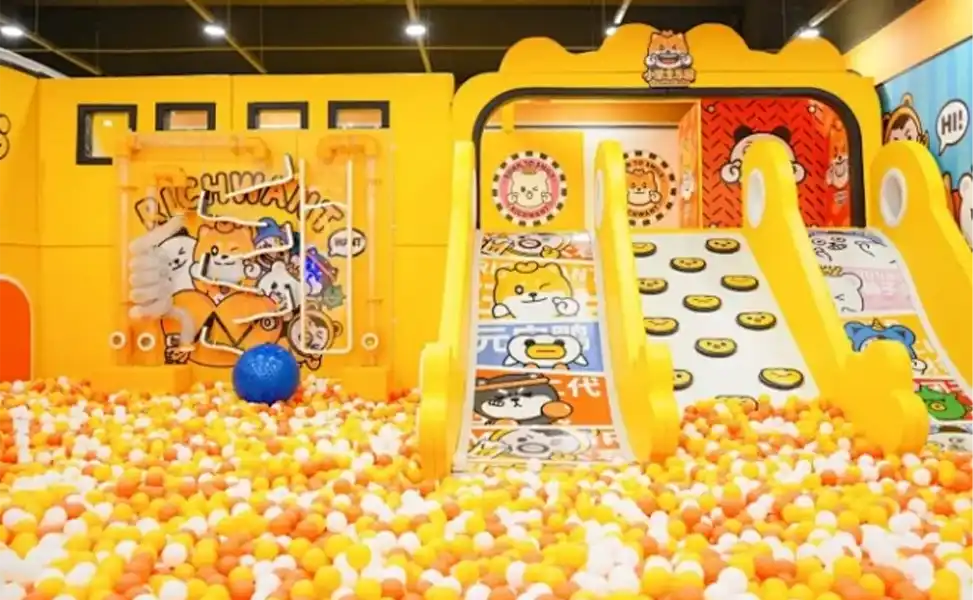 Key Cost Components of an Indoor Play Center
Facility Costs
Facility expenses account for roughly 30–40% of the initial investment. These include leasing or purchasing space, renovations, and compliance with local regulations.
- Lease or Purchase Costs: Commercial space costs vary. For an 8,000 sq ft venue:
- Lease: $15–$50 per sq ft per year
- Purchase: $150–$500 per sq ft depending on location
- Renovation and Design: Flooring, padding, lighting, HVAC, and theming cost $50–$120 per sq ft. Safety and functionality should guide all design choices.
- Permits & Compliance: Budget $5,000–$20,000 for fire safety, accessibility, and local permits.
Facility Cost Table:
| Cost Item | Estimated Range (USD) | Notes |
|---|---|---|
| Lease (8,000 sq ft) | $120,000 – $400,000/year | Varies by urban area |
| Renovation & Design | $400,000 – $960,000 | Flooring, walls, lighting, HVAC, theming |
| Permits & Compliance | $5,000 – $20,000 | Fire safety, accessibility, local licenses |
For equipment suggestions, see our Indoor Playground Equipment Catalog.
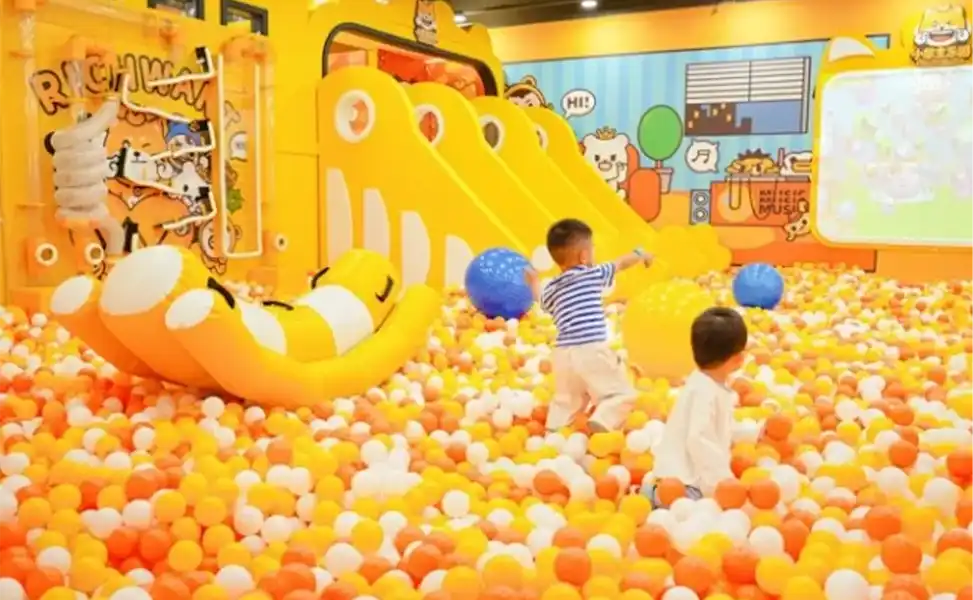 Play Equipment Costs
Equipment typically represents 40–50% of the total investment. Quality, size, interactivity, and custom features determine cost.
- Soft Play Areas: $20,000–$100,000, ideal for toddlers and preschoolers.
- Climbing Frames & Slides: $10,000–$100,000+, suitable for older kids.
- Interactive & Digital Zones: $15,000–$150,000, including AR/VR games and STEM stations.
- Safety Features: $10,000–$30,000, covering padding, mats, and barriers.
Equipment Cost Table:
| Equipment Type | Estimated Cost (USD) | Notes |
|---|---|---|
| Soft Play Zones | $20,000 – $100,000 | Toddlers and preschoolers |
| Climbing Frames & Slides | $10,000 – $100,000+ | Modular structures for older kids |
| Interactive/Digital Stations | $15,000 – $150,000 | AR, VR, STEM, gamified zones |
| Safety Features | $10,000 – $30,000 | Floor mats, padding, barriers |
When purchasing equipment, prioritize suppliers with EN1176/1177 or ASTM safety certification. For recommended vendors, see our Indoor Play Center Equipment Suppliers.
Staffing and Operational Costs
Operational costs, including staffing and maintenance, typically account for 20–25% of total expenses.
- Staffing: 5–15 employees may be required, covering reception, supervision, and maintenance. Annual salary: $25,000–$40,000 per staff.
- Utilities & Insurance: $20,000–$50,000 annually for electricity, water, internet, and liability coverage.
- Maintenance & Replacement: 5–10% of equipment costs annually to maintain safety and hygiene standards.
Operational Costs Table:
| Component | Estimated Annual Cost (USD) | Notes |
|---|---|---|
| Staffing | $125,000 – $400,000 | Based on facility size and location |
| Utilities & Insurance | $20,000 – $50,000 | Includes electricity, water, liability |
| Maintenance & Replacement | $15,000 – $50,000 | Regular inspections and cleaning |
Marketing and Customer Acquisition
Effective marketing ensures sustainable revenue and repeat visitors.
- Grand Opening Campaigns: Social media ads, local partnerships, events: $5,000–$20,000.
- Ongoing Marketing: Monthly campaigns, Google Ads, and email newsletters: $1,000–$5,000.
- Loyalty Programs & Community Engagement: Seasonal events, school partnerships, and membership programs boost retention.
For digital marketing guidance, see our trampoline park Blog.
Total Estimated Investment for a 2026 Indoor Play Center
Summarizing the main cost components for a mid-sized indoor play center (~8,000 sq ft):
| Component | Estimated Range (USD) |
|---|---|
| Facility Lease & Renovation | $325,000 – $1,500,000 |
| Play Equipment | $60,000 – $400,000 |
| Staffing & Operational | $160,000 – $500,000/year |
| Marketing | $20,000 – $60,000 |
| Total Initial Investment | $465,000 – $1,960,000 |
Investments vary depending on facility location, equipment sophistication, and operational model. Advanced interactive zones may increase costs but also enhance family entertainment value and customer loyalty.
Conclusion
Launching an indoor play center in 2026 requires strategic planning and precise budgeting. Careful attention to facility selection, equipment quality, staffing, safety, and marketing ensures profitability and long-term success.
For B2B buyers, understanding these cost components allows informed procurement decisions, minimizes risk, and maximizes ROI. By leveraging reputable suppliers and aligning with current indoor playground trends, your indoor play center can thrive in a competitive market.
Call to Action
Ready to bring your indoor play center vision to life? Contact our factory today for:
- Custom Equipment Quotes tailored to your space and budget
- Professional Layout & Design Consultation for maximum ROI
- Turnkey Solutions from procurement to installation
Submit your inquiry now and start building a profitable, safe, and engaging indoor play center for 2026!