Introduction
The global indoor playground industry has grown rapidly over the last decade. Families are increasingly looking for safe, climate-controlled entertainment spaces where children can play, learn, and socialize. As a result, many entrepreneurs, mall developers, and family entertainment center (FEC) investors are entering this market.
However, before launching a project, investors must answer an important question:
Should you open an indoor playground franchise or start an independent indoor play center?
Both models can be profitable, but they differ in startup costs, operational flexibility, brand advantages, and long-term profitability. Some investors prefer the structure of a franchise, while others want the creative freedom of running their own indoor play center business.
For B2B buyers purchasing indoor playground equipment, soft play structures, or designing a kids play zone, understanding these differences is essential. The business model you choose will influence equipment selection, marketing strategy, and ROI.
In this guide, we will compare indoor playground franchise vs independent play center models and explain their advantages, disadvantages, and profitability potential.
What Is an Indoor Playground Franchise?
Definition and Business Model
An indoor playground franchise allows an entrepreneur to operate under an established brand. Instead of building a new brand from scratch, the investor purchases the right to use an existing company’s name, business model, and operating system.
Typically, the franchisor provides:
Brand identity and marketing materials
Operational manuals and staff training
Playground design guidelines
Business management systems
In return, the franchisee pays an initial franchise fee and ongoing royalty payments, usually calculated as a percentage of revenue.
For investors entering the indoor playground industry for the first time, this structure can reduce risk and simplify operations.
Revenue Streams of Franchise Playgrounds
Most indoor playground franchises generate income through multiple channels.
The core revenue sources usually include:
| Revenue Source | Description |
|---|---|
| Admission Tickets | Hourly or daily entry to the indoor play area |
| Birthday Parties | Party packages with decorations and food |
| Membership Plans | Monthly passes for repeat visitors |
| Food & Beverage | Cafes or snack bars |
| Merchandise | Toys or branded souvenirs |
| Events | Holiday activities or educational programs |
Many franchise operators also integrate arcade machines or redemption games to increase revenue per visitor.
If you want to explore these attractions, you can also see:
Family Entertainment Center Design
Advantages of Indoor Playground Franchises
One major advantage of an indoor playground franchise is brand recognition.
Parents often trust well-known brands because they associate them with safety standards and quality play experiences. This trust can shorten the time required to attract customers after opening.
Another benefit is operational support. Franchise systems usually provide training programs covering daily management, staff recruitment, customer service, and marketing strategies.
Franchises also offer a tested business model. Since the system has been used in multiple locations, many operational challenges have already been solved.
Disadvantages of Franchise Playgrounds
Despite these advantages, franchise playgrounds also have limitations.
The most significant drawback is cost. Franchise fees can range from $30,000 to $150,000, depending on the brand. Additionally, franchisees often pay 5%–10% of monthly revenue as royalties.
Another limitation is reduced flexibility. Franchise agreements typically control many aspects of the business, including:
Playground layout
Equipment suppliers
Branding and interior design
Pricing strategies
This can make it harder to adapt to local market conditions.
Who Should Choose a Playground Franchise?
An indoor playground franchise is often suitable for:
First-time investors
Shopping mall operators
Entrepreneurs who want structured guidance
Investors with limited industry experience
These investors benefit from a ready-made system that reduces operational uncertainty.
 What Is an Independent Indoor Play Center?
Definition and Business Model
An independent indoor play center is a playground business owned and operated without a franchise agreement.
Instead of paying for brand licensing, the owner creates a unique brand identity and designs the venue independently.
Most independent operators purchase indoor playground equipment directly from manufacturers. This allows them to customize the layout, theme, and attractions based on their venue size and local market demand.
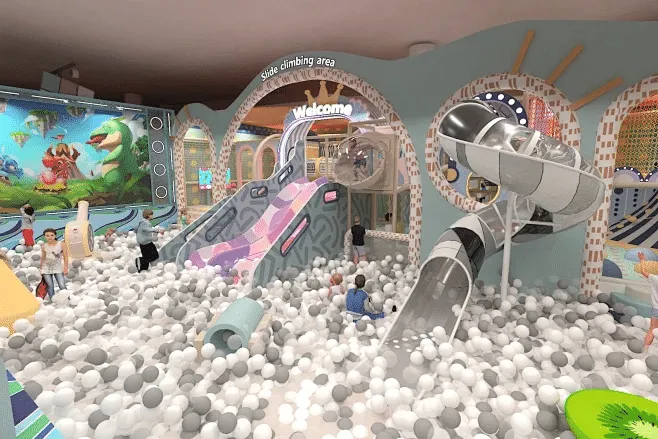
For example, many modern kids indoor play areas combine multiple attractions, such as:
Soft play structures
Ball pits and slides
Trampoline zones
Ninja obstacle courses
Arcade games
If you want to explore equipment options, see:
Custom Indoor Playground Equipment Solutions
Revenue Sources of Independent Play Centers
Independent play centers typically use flexible pricing strategies.
Common revenue streams include:
Entrance tickets
Birthday party bookings
Membership programs
Café or snack bar sales
Arcade machines
Seasonal promotions
Because independent operators control their pricing, they can adjust their strategy based on customer demand and local competition.
Advantages of Independent Play Centers
One of the biggest advantages of an independent indoor play center is creative freedom.
Owners can design unique themes and experiences that differentiate their venue from competitors. This flexibility allows them to create memorable environments for children and families.
Another advantage is lower startup costs. Without franchise fees, investors can allocate more budget to high-quality equipment or marketing campaigns.
Independent operators also enjoy higher profit retention, since there are no ongoing royalty payments.
Finally, independent play centers allow flexible expansion. Operators can gradually add attractions such as:
VR simulators
climbing walls
trampoline areas
arcade game zones
These upgrades can significantly increase revenue.
Disadvantages of Independent Play Centers
The main challenge of launching an independent play center is the lack of brand recognition.
Unlike franchises, independent venues must build their reputation through marketing, social media, and community engagement.
Another challenge is operational responsibility. Owners must develop their own management systems, including safety protocols, staff training, and customer service procedures.
However, many investors overcome these challenges by working with experienced indoor playground manufacturers that provide design and operational guidance.
Who Should Open an Independent Play Center?
An independent indoor play center is best suited for:
Experienced entrepreneurs
FEC developers
Investors seeking higher long-term profits
Operators who want full brand control
These investors often prioritize flexibility and brand ownership.
Indoor Playground Franchise vs Independent Play Center: Key Differences
The two business models differ in several important ways.
| Factor | Franchise Playground | Independent Play Center |
|---|---|---|
| Brand Recognition | Strong established brand | Must build brand |
| Startup Cost | Higher due to franchise fees | Lower |
| Operational Support | Provided by franchisor | Self-managed |
| Profit Retention | Reduced by royalties | 100% retained |
| Flexibility | Limited | Full control |
| Expansion Options | Restricted | Flexible |
For many investors, the decision comes down to security vs flexibility.
Profitability Comparison
The indoor playground business can be highly profitable when managed effectively.
Startup costs vary depending on project size, equipment quality, and location.
| Metric | Franchise Playground | Independent Play Center |
|---|---|---|
| Typical Startup Cost | $200k–$500k | $100k–$350k |
| Profit Margin | 15%–25% | 20%–35% |
| ROI Timeline | 2–4 years | 1.5–3 years |
Franchises may attract customers faster initially, but independent venues often achieve higher long-term profitability due to lower operational costs.
 How to Choose the Right Model
Choosing between a franchise and an independent indoor play center business requires careful planning.
1. Investment Budget
If your budget is limited, an independent model may be more suitable because it eliminates franchise fees.
2. Market Competition
In large cities with strong competition, a recognizable franchise brand may offer a marketing advantage.
3. Industry Experience
Entrepreneurs with limited experience may benefit from franchise training systems.
Experienced operators often prefer independent models for greater flexibility.
4. Equipment Supplier
Regardless of the business model, selecting a reliable indoor playground equipment supplier is critical.
A professional manufacturer can provide:
Custom playground design
Safety-certified materials
Compliance with ASTM / EN safety standards
Installation support
Long-term maintenance services
Conclusion
The indoor playground industry continues to grow as families seek safe and engaging entertainment environments for children.
Both indoor playground franchises and independent indoor play centers offer strong investment opportunities. Franchises provide brand recognition and operational support, making them ideal for new investors.
Independent play centers, however, offer greater flexibility, lower startup costs, and higher profit retention. For experienced entrepreneurs or FEC developers, this model often delivers stronger long-term returns.
Ultimately, the best choice depends on your budget, experience, and long-term business goals.
Start Your Indoor Playground Project
If you are planning to launch an indoor playground, kids play center, or family entertainment center, choosing the right equipment partner is essential.
A professional supplier can help you design a safe and profitable play environment with high-quality soft play structures and indoor playground equipment.
Contact our team today to receive:
Free playground layout design
Equipment recommendations
Project quotation
Global shipping and installation support
Start building your indoor playground business and create an exciting entertainment space for families in your community.