Introduction
The indoor playground industry has grown rapidly in the United States over the past decade. From shopping malls and trampoline parks to family entertainment centers (FECs), indoor play areas have become a popular destination for children and families.
However, when building an indoor playground, safety compliance is one of the most critical factors. Playground structures are used by children every day, often involving climbing, sliding, and jumping. Without proper design standards and material regulations, the risk of accidents and liability increases significantly.
For investors, distributors, and project developers, understanding Indoor Playground Safety Standards in the USA is essential before purchasing equipment. Many local authorities and insurance companies require proof that playground equipment follows recognized safety regulations.
This guide explains the key indoor playground safety standards, what certifications manufacturers should meet, and how buyers can choose reliable suppliers when sourcing indoor playground equipment.
Why Indoor Playground Safety Standards Matter
Safety standards play an important role in ensuring that indoor play environments are safe, durable, and suitable for children. Indoor playground structures are complex systems made up of steel frames, climbing components, slides, tunnels, and soft play obstacles.
These structures must be carefully engineered to prevent potential hazards such as:
Falls from elevated platforms
Head or limb entrapment
Hard surface impacts
Structural instability
When playground equipment follows recognized indoor playground safety standards, the likelihood of these risks is significantly reduced.
Another important reason for safety compliance is insurance and legal protection. In the United States, many insurance providers require proof that indoor playground equipment meets ASTM or similar safety standards before issuing liability coverage.
Additionally, parents are increasingly aware of safety conditions in children’s play environments. A professionally designed indoor playground that follows strict safety guidelines helps operators build customer trust and long-term brand reputation.
Key Indoor Playground Safety Standards in the United States
Several organizations define safety guidelines for playground equipment in the United States. These standards cover structural design, materials, fire safety, and product testing.
Understanding these regulations helps buyers ensure that the indoor playground equipment they purchase can pass inspections and operate safely.
ASTM F1918 – Soft Contained Play Equipment Standard
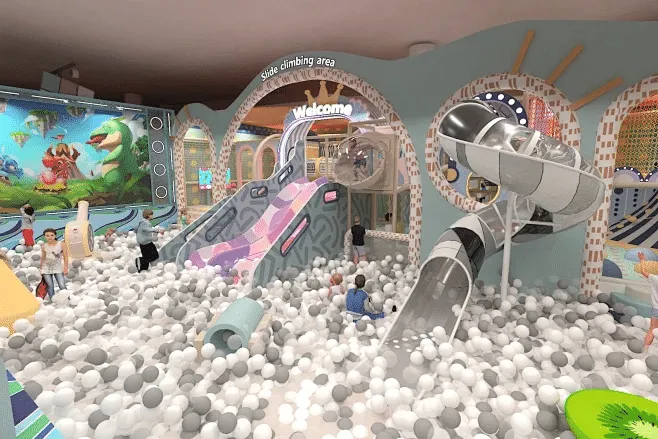
ASTM F1918 is the most widely recognized indoor playground safety standard in the United States. It focuses specifically on soft contained play equipment, which refers to multi-level indoor playground structures enclosed with nets, padded barriers, and protective materials.
These play systems are commonly found in:
Indoor playground centers
Kids entertainment zones
Family entertainment centers
Shopping mall play areas
The purpose of ASTM F1918 is to ensure that children can explore and play safely within enclosed structures.
Main Requirements of ASTM F1918
| Safety Category | Key Requirement | Purpose |
|---|---|---|
| Structural Stability | High-strength steel frame and secure connectors | Prevent equipment collapse |
| Guardrails & Barriers | Required for elevated play platforms | Reduce fall risks |
| Impact Protection | Foam padding on metal components | Prevent injuries |
| Entrapment Prevention | Controlled openings and spacing | Avoid head or limb trapping |
| Safety Netting | Enclosed climbing areas | Keep children inside structure |
Manufacturers designing indoor playground equipment for the U.S. market typically follow this standard when creating multi-level soft play systems.
ASTM F1487 – Playground Equipment Safety Specification
Although ASTM F1487 was originally developed for outdoor playgrounds, many design principles are also applied to indoor play environments.
This standard focuses on playground equipment safety performance, including platform height limits, guardrail requirements, and safe equipment spacing.
Key aspects include:
Safe climbing structures
Fall zone recommendations
Guardrail design guidelines
Platform height limitations
By combining ASTM F1918 and ASTM F1487 guidelines, designers can create safer indoor playground layouts that reduce potential injury risks.
CPSIA – Consumer Product Safety Improvement Act
Another important regulation affecting indoor playground equipment is the Consumer Product Safety Improvement Act (CPSIA).
This law focuses on material safety for children’s products, ensuring that equipment used by children does not contain harmful substances.
Key CPSIA requirements include:
Strict limits on lead content in coatings and paints
Restrictions on phthalates in plastics
Mandatory third-party laboratory testing
Product traceability and certification documentation
For indoor playground equipment manufacturers, CPSIA compliance ensures that all plastic panels, soft padding materials, and coatings are safe for children.
Fire Safety and Local Building Regulations
In addition to national safety standards, indoor playground operators must follow local fire and building codes.
These regulations vary by state or city but typically require:
Flame-retardant materials
Emergency exits and evacuation routes
Fire sprinkler compatibility
Occupancy limits for indoor play areas
Before opening an indoor playground center, operators often need approval from local building inspectors or fire marshals.
This is why experienced playground manufacturers usually provide fire-retardant materials and installation guidelines to support compliance.
What Types of Manufacturers Can Meet U.S. Safety Standards
Not every playground equipment supplier has the ability to meet international safety standards. Buyers should evaluate manufacturers carefully before placing orders.
Reliable indoor playground manufacturers usually have several important characteristics.
Certified Materials and Components
Professional manufacturers use materials that meet international safety regulations.
Common materials used in high-quality indoor playground equipment include:
Galvanized steel frames for structural durability
Flame-retardant foam padding for impact protection
Non-toxic PVC coverings for soft play components
High-density polyethylene panels for climbing structures
These materials help ensure compliance with CPSIA regulations and indoor playground safety standards.
Engineering and Structural Testing
Indoor playground structures must withstand heavy daily use. As a result, experienced manufacturers conduct engineering tests before delivering equipment.
Typical testing procedures include:
Structural load testing
Impact resistance testing
Component durability testing
Safety gap inspections
Some manufacturers also work with third-party testing laboratories to verify that their indoor playground equipment meets international safety guidelines.
International Project Experience
Manufacturers with export experience often understand regulatory requirements in different markets.
Suppliers that regularly ship indoor playground equipment to regions such as North America, Europe, and Australia are usually familiar with:
ASTM safety requirements
CPSIA material regulations
International logistics and installation procedures
For B2B buyers, working with experienced exporters reduces the risk of purchasing non-compliant playground equipment.
If you want to learn more about selecting suppliers, you can read our guide:
How to Choose Kids Indoor Playground Equipment
Mandatory vs Recommended Safety Requirements
When building an indoor playground project, it is helpful to understand which requirements are mandatory and which are considered best practices.
Mandatory Compliance Requirements
The following requirements are typically essential for indoor playground equipment used in the United States.
| Requirement | Why It Matters |
|---|---|
| ASTM F1918 compliance | Core indoor playground safety standard |
| CPSIA material compliance | Required for children’s products |
| Fire-retardant materials | Required by building regulations |
| Structural safety testing | Ensures equipment durability |
Without meeting these requirements, indoor playground equipment may fail inspections or insurance approvals.
Recommended Safety Practices
Some safety practices depend on the project location and facility design.
Recommended considerations include:
ADA accessibility design
Additional protective padding
Clear safety signage
Improved crowd-flow planning
While not always legally required, these measures enhance safety and improve the overall user experience.