Why Some Play Centers Fail (And How to Avoid It)
Indoor play centers are a rapidly growing segment of the family entertainment industry. However, many operators face unexpected challenges, leading to play center failure within the first few years. Understanding these challenges and applying strategic solutions is essential for ensuring indoor playground success and sustainable business growth.
Location and Market Misalignment
A poor location is one of the most common reasons for play center failure. Even a well-designed facility cannot thrive without sufficient foot traffic and target customer alignment.
- Foot Traffic Matters: Choosing a site with low pedestrian flow or difficult vehicle access can dramatically reduce visitor numbers.
- Target Demographics: Analyze the local population to ensure the presence of families with children under 12. Areas with few children are more likely to result in low attendance.
- Competition Analysis: High local competition can split your potential audience and impact revenue.
Location Factors and Revenue Impact
| Factor | Description | Potential Impact |
|---|---|---|
| Foot Traffic | Average daily visitors | Low traffic → 30–50% fewer visits |
| Demographics | Children aged 3–12 in the area | Mismatch → underutilized zones |
| Competitor Density | Number of similar centers within 5 km | High → market share drops 20–40% |
Solution: Conduct a market feasibility study and select a location with strong accessibility and local demand. For more guidance on site selection, check our How Many Square Meters Does Your Indoor Playground Need?
 Lack of Unique Selling Proposition (USP)
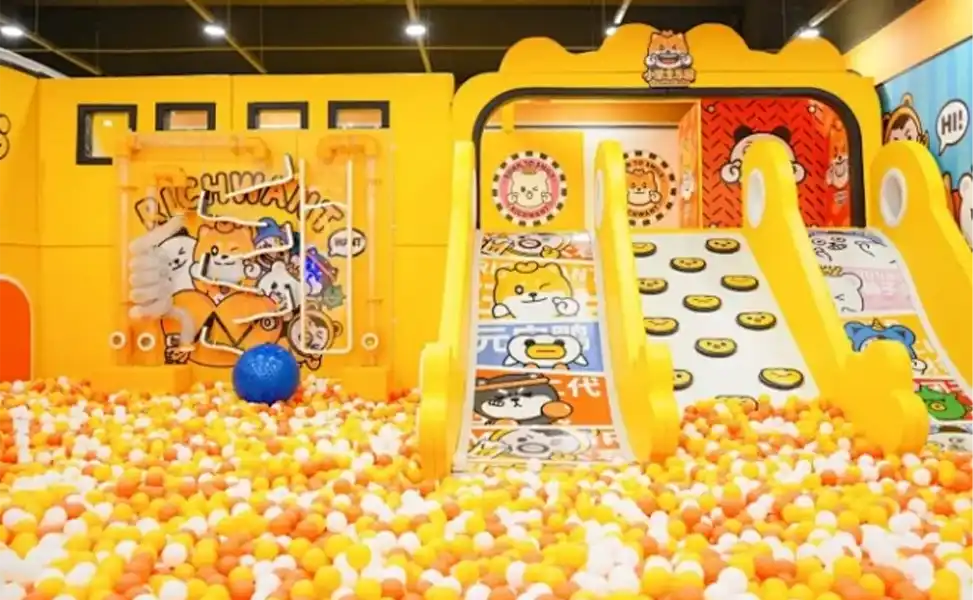
A center that lacks a unique identity struggles to retain visitors. Simply offering standard slides or ball pits is no longer sufficient for indoor playground success.
- Innovation Deficit: Introducing interactive, themed, or tech-enhanced attractions encourages repeat visits.
- Customer Experience: Modern centers combine physical activity, gamification, and educational content to create memorable experiences.
- Brand Recognition: A strong theme or recognizable brand helps stand out in both search engine results and local social media.
Case Example: An indoor trampoline park that added a ninja course and AR climbing walls experienced 40% higher repeat visits than nearby standard indoor playgrounds.
Solution: Define a clear USP through innovative attractions and interactive play zones. Modular play equipment allows periodic updates, keeping your facility fresh and engaging. Explore our Indoor Play Equipment Catalog for innovative solutions.
Budget and Financial Mismanagement
Many play centers fail due to poor financial planning. Overspending on equipment or mismanaging operating costs can jeopardize cash flow.
- High Equipment Costs: Custom or oversized installations can strain working capital.
- Operating Expenses: Staff salaries, maintenance, utilities, and insurance often consume 35–45% of revenue for mid-size centers.
- Cash Flow Challenges: Seasonal fluctuations or unplanned costs can prevent operators from covering fixed expenses.
Typical Mid-Size Play Center Budget
| Expense | Percentage of Budget |
|---|---|
| Equipment Purchase & Installation | 35% |
| Staff & Training | 25% |
| Marketing & Promotions | 10% |
| Maintenance & Utilities | 15% |
| Insurance & Licenses | 5% |
| Contingency Fund | 10% |
Solution: Adopt phased investment planning and maintain 6–12 months of operational reserves. Monitor KPIs like revenue per visitor and break-even analysis regularly to maintain financial health.
 Ineffective Marketing and Customer Acquisition
Even a well-designed indoor playground requires active marketing. Centers that fail to attract and retain customers often experience play center failure.
- Digital Marketing: Utilize SEO, social media, and email newsletters to boost visibility.
- Local Engagement: Partner with schools, community centers, and events to drive consistent traffic.
- Retention Programs: Birthday packages, loyalty programs, and seasonal events increase repeat visits.
Case Example: A center that combined SEO, social media campaigns, and local school partnerships increased monthly visitors by 60% within six months.
Solution: Implement a multi-channel marketing strategy that balances online and offline efforts. Track metrics like Cost per Acquisition (CPA) and Return on Marketing Investment (ROMI) to optimize campaigns.
Safety and Operational Management Failures
Safety issues are a critical factor in play center failure. Poor maintenance or untrained staff can lead to accidents, lawsuits, and reputational damage.
- Equipment Maintenance: Weekly inspections of climbing structures, trampolines, and foam pits are essential.
- Employee Training: Staff must be trained in safety protocols, first aid, and child supervision.
- Compliance: Follow industry standards, such as ASTM F1487-21, for playground safety.
Safety Checklist
| Area | Requirement | Frequency |
|---|---|---|
| Climbing Structures | Bolt integrity, padding | Weekly |
| Foam Pits | Foam depth, quality | Monthly |
| Trampolines | Mat tension, netting | Daily |
| Staff Training | First aid, emergency drills | Quarterly |
Solution: Establish standard operating procedures for safety, conduct regular inspections, and provide staff refresher courses. Promote your safety protocols publicly to enhance trust.
Strategic Takeaways for Avoiding Failure
By addressing the above factors, operators can significantly reduce the risk of play center failure and ensure indoor playground success.
- Market Feasibility: Analyze location, competition, and local demographics before investing.
- Unique Experience: Integrate themed attractions, interactive technology, and educational play.
- Financial Discipline: Phase investments, monitor KPIs, and maintain reserve funds.
- Effective Marketing: Combine SEO, social media, community partnerships, and loyalty programs.
- Safety First: Follow standards, maintain equipment, and train staff diligently.
For more insights, see our How to Start an Indoor Playground Business.
Conclusion
Indoor play centers offer tremendous opportunities, but success requires strategic planning, financial discipline, operational excellence, and marketing savvy. By understanding why some play centers fail and implementing proactive strategies, operators can maximize revenue, retain customers, and ensure sustainable growth.
Adopting a customer-focused, safety-conscious, and data-driven approach transforms a standard children’s play area indoor into a profitable and enduring entertainment destination.